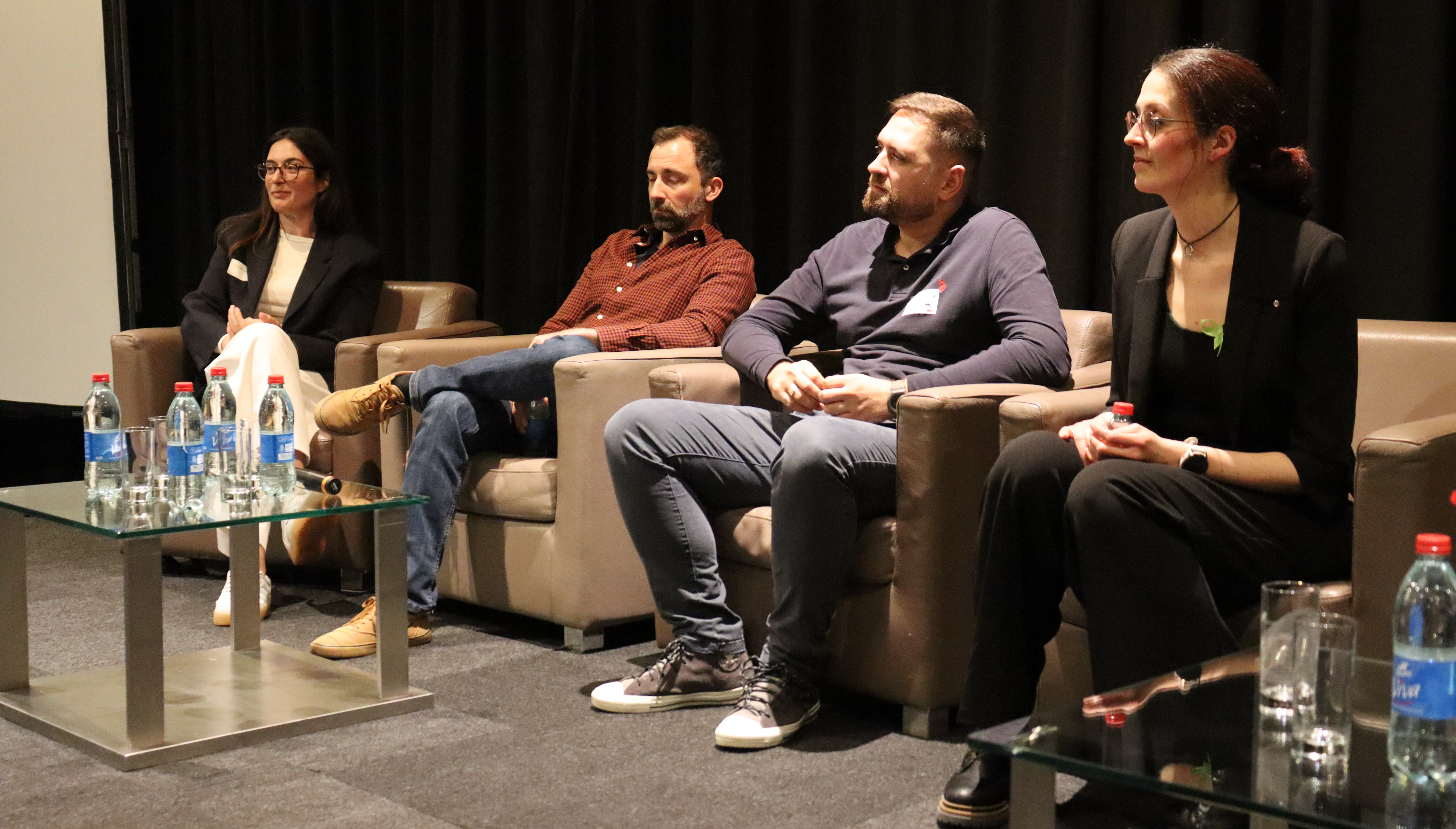
On 16 October 2026, ALIA led a ‘World Café’ in collaboration with OKAJU (Ombudsman for Children and Young People) as part of the Resilience Forum ‘Gesond liewen an enger digitaler Welt’, organised by the National Addiction Prevention Centre (CNAPA). This event, which marked the close of the ‘Mental Health Weeks’, aimed to raise public awareness of ways to maintain mental health and build resilience in an increasingly digital world.
The ‘World Café’, run by ALIA and OKAJU, formed part of the ‘Protection’ pillar, one of the forum’s four thematic areas, alongside prevention, intervention and empowerment. It focused on a key question: how can we protect children and young people on digital platforms whilst respecting their autonomy and their right to participate?
Bringing together professionals from various sectors, the discussions focused in particular on risks relating to privacy, the sharing of images and personal data, cyberbullying and inappropriate online behaviour. Particular attention was paid to the role of parents in accompanying their children in the digital world.
The discussions highlighted the importance of open and non-judgemental dialogue, enabling young people to talk about their experiences and difficulties without having to fear punishment. Rather than systematically imposing restrictions, parents are encouraged to listen to their children, take an interest in the platforms they use and seek solutions together with them. Their exemplary role in the responsible use of digital media was also emphasised. The importance of setting age-appropriate rules, supporting children in managing their screen time and offering them offline activities was also highlighted.
One key conclusion emerged from the discussions: protecting young people does not mean systematically restricting their autonomy, but rather equipping them with the skills they need to navigate the digital environment responsibly and safely. This requires trust, support and the active involvement of young people in decisions that affect them, whilst maintaining the responsibility of adults to protect them.
During the evening session, Charel Schmit, Ombudsman for Children and Young People, outlined the main risks faced by children and young people in the digital environment, including online violence, inappropriate content and new risks linked to artificial intelligence. He also emphasised the importance of safeguarding children’s rights, balancing their protection with their right to information and participation.
Samra Cindrak, representative of ALIA, then presented the European Commission’s proposed ‘EU Kids Act’ regulation, which aims to harmonise measures to protect minors across Member States. In particular, it provides for a model of age-based, progressive access to social media, accompanied by parental control measures and enhanced protection for minors. The presentation also highlighted the importance of media literacy and the need to provide parents with practical tools and advice to better support their children in their digital activities.
The round-table discussion that followed provided an opportunity to explore several topical issues in greater depth, including a possible ban on social media for minors, age verification mechanisms and the solution based on the ‘EU Digital Identity Wallet’, proposed by the European Commission.